
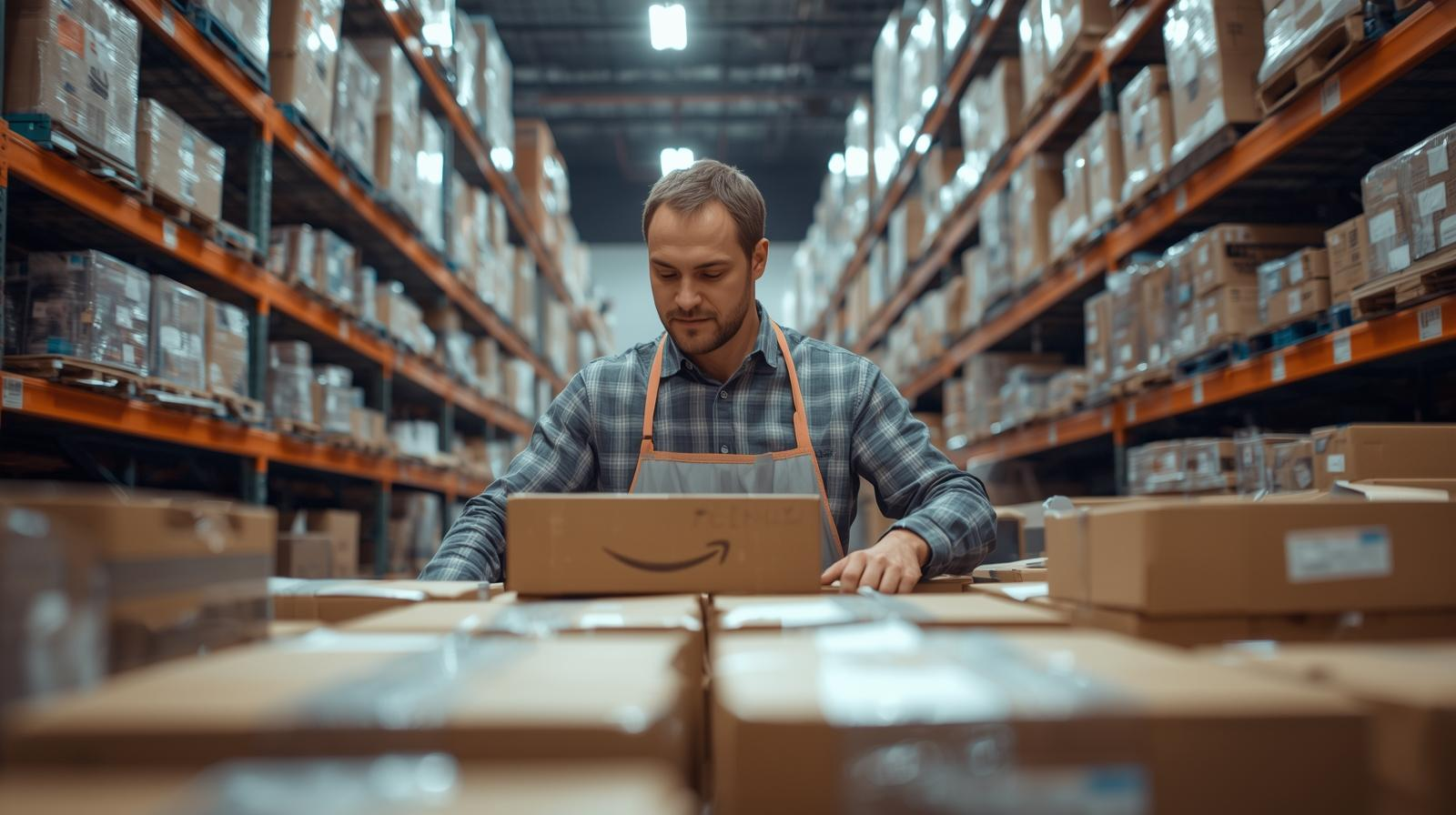
So you’ve probably about Amazon FBA maybe from a TikTok creator claiming they made six figures in their first year, or from a YouTube ad promising you can quit your job and get your time back. 🍸
Soooo good!😌
But before you get to that vision, you need to realize that starting an Amazon FBA business can be life-changing but challenging thing to start.
It takes planning, research, and a willingness to learn the ropes. (A lot of ropes) And I’m going to help you climb some of these ropes a little easier.
We’ll go a little deep into each step so you know not just what to do, but also why it matters and how to avoid the mistakes that cost beginners time and money.
Let’s Begin….🧐
Step 1: Understand What Amazon FBA Really Is
Before you spend a dime, let’s clear up the big question: What exactly is Amazon FBA?
FBA stands for Fulfillment by Amazon. Think of it as Amazon being your warehouse, your shipping team, and your customer service department rolled into one. You (the seller) choose a product, source it from a supplier, and send it in bulk to Amazon’s warehouse. From there, Amazon takes over—packing (if you want), shipping, and even handling customer returns.
That means you don’t have to store boxes in your garage or spend weekends driving to the post office. Amazon’s team does the heavy lifting, while you focus on running your business. Sounds good so far?
Now, here’s the part most people miss: Amazon FBA is not a magic button to quick wins. You’re still responsible for doing the market research, picking products people actually want, marketing your listings, and managing your business like you own it.
Think of Amazon as your business partner who provides the infrastructure and consumers, while you provide the vision.
If you go in thinking FBA is passive income right from day one, you’ll end up frustrated. But if you see it for what it is—a business model where Amazon takes care of logistics so you can focus on growth—you’ll be set up for success!
Action Steps:
- Explore Amazon FBA basics through their Youtube channel.
- Grab a pen/paper and dedicate time going through the lessons in order, starting with the “Get Started” video section.
- Ask the honest questions: Do I have the time, some money, patience, and energy to do this business model?
Learn as much as you can before beginning, so the foundations of FBA and e-commerce don’t come as too much of a surprise. You don’t need a course to “shortcut” the learning. Take your time and do it right!
Step 2: Choose Your Business Model Inside Amazon FBA
Here’s where things get fun (and a little overwhelming at first). Amazon FBA isn’t just one-size-fits-all. There are actually different ways to run your business under the FBA umbrella. The three most common models are:
- Private or White Label – This is where you create your own brand. You source a generic product (like yoga mats or water bottles), slap your branding on it, and market it as your own. This model has the highest profit potential but also requires more upfront investment in design, packaging, and marketing.
- Retail Arbitrage – This is the “find it cheap, sell it high” method. You hunt for discounted items at stores like Walmart, Target, or even clearance racks, then resell them on Amazon for a profit. It’s low-cost to start, but harder to scale. Also, due to high competition with these items, its typically a race to the bottom with prices.
- Wholesale – This is where you buy products in bulk directly from established brands or distributors and resell them on Amazon. It requires building relationships with suppliers and usually involves a bigger upfront order.
- Dropshipping – Yes, dropshipping has landed on Amazon. Very popular with younger generations and foreign sellers. Click here to learn more about this model.👀
Most beginners are drawn to private label because it’s the path to building your own brand that you control and potentially selling your business later. But don’t overlook arbitrage and wholesale if you’re strapped for cash and just want to dip your toes in first.
However, if you want to be seen as a serious brand, private labeling is where its at!
Bottom line: Don’t stress about picking the “perfect” model right now. Start where you are. If you’ve got $500 to test the waters, retail arbitrage is a great training ground. If you’re ready to invest a few thousand, private label could be your golden ticket.
Action Steps:
- Evaluate the pros and cons of each business model here. 👀
- Review your finances to see where you are with capital (money) for this venture. 💰Do you need a business partner for more capital? Do you need to raise/save more money for a little while?
- Develop a healthy mindset about business and plan out when you have time throughout your schedule to work on your business. Write your schedule out and stick with it throughout this process. Working on your business every day should be a goal. If not every day, when? Figure this out before moving forward! ‼️
Be honest with what you have and don’t have regarding time, money, and patience. No judgement! Just don’t rush! If you are aching for money at this point, wait until you have your finances in order and then circle back to Step 3. 🙏
Step 3: Do Your Product Research (This Is EVERYTHING)
If there’s one step that makes or breaks your Amazon FBA journey, it’s this one: choosing the right-ish product.😁
You don’t want to pick something just because you like it. That might not work for ya!😅
You need data-backed proof that people are searching for it, buying it, and not drowning in competition. Yes, Amazon has become highly oversaturated with products. But there is a way for you to stand out.
Here’s what to look for in a “winning product:”
- High demand, low competition. Use tools like Helium 10, Jungle Scout (beginner-friendly), or AMZScout to track sales volume and competition. Pick one of these softwares and learn how to use it. They all have tutorials!✨
- Lightweight and easy to ship. Think under 3 pounds and/or able to fit in a shoebox. Heavy or fragile items rack up shipping costs and headaches. No electronics or digestible products starting out. Make it simple, your first go around. 👍🏽
- Price sweet spot. Products between $15 and $50 tend to sell well. Most people on Amazon are middle-class consumers. This price range is affordable for buyers while still leaving room for profit.
- Room for improvement. Look for how you can take a semi-competitive item and make it better and more unique. Read reviews on similar products and see how you can make adjustments. Are customers complaining about flimsy packaging or missing features? That’s your chance to swoop in and offer something better.
- Does it solve a problem? Most consumers are looking for something that will make their lives better or easier. If your product is a lmap, consumers may be less compelled to purchase it versus that fitness or pet item.
Here’s an Example:
High demand & Sweet Spot Price: Let’s say you notice resistance bands are trending with a price range of $20. ✔️
Lightweight & Solves a Problem: This product assists with weight loss and strength training. ✔️
Room for Improvement: Next you try to figure out your unique value proposition: how can you make your resistance bands better? So you dig deeper and find that customers complain about them snapping too quickly. ✔️
Time to Build Your Brand: You source higher-quality bands, add your logo, and a free carrying bag. So with good marketing and dedication, you now become the #1 seller of high-quality resistance bands with the free carrying bag on Amazon! Yay! (Yes, this can happen!)
Action Steps:
- Pick one software to do product research. Spend a few days learning how to use it. Take advantage of the trial days.
- Find your top 10-15 winning products that fit the “winning product” mold as closely as possible.
- Once you have your list, just pick and move on. No more analysis paralysis. Just keep going.
- Optional Step (Recommended) : Develop a quick plan if the product doesn’t sell. (This can happen) How will you liquidate and get as much of your invested money back as possible? This could be done by selling the items for cheap on Facebook Marketplace, Ebay, or to a local store that carries similar products.
These step takes patience. But don’t take forever to choose. Make the list of 10-15 products that fit these criteria the most, and pick the one that you are willing to test first. You never know if it’s a banger until you get out there and try!💯
Step 4: Find a Reliable Supplier
Once you’ve got your product idea locked in, it’s time to find someone who can actually make it. The most common place to start is Alibaba, which connects you to thousands of manufacturers (mostly in China). But, the platform is beginning to add other manufacturers from other countries. Don’t be intimidated—it’s like online shopping, but for bulk orders.
Here’s how to vet suppliers:
- Look for Gold Suppliers. These are verified and more trustworthy. Make sure they have been around for at least 5+ years plus.
- Order samples. Always, always test the product yourself before ordering in bulk. Most samples will range between $50 and $200. Its a large expense, but it can definitely be worth it to make sure you like the quality of the products. 👍🏽
- Negotiate terms. Don’t be afraid to ask for better pricing or smaller minimum order quantities (MOQs) when starting. You should only be getting about 100-500 units starting out to make sure this is an actual winning item.
- Check communication. If a supplier is slow to reply or dodges your questions, move on. Period. If they are playing games now, they will play games later.
Alternatives: You can also look for suppliers in the U.S. if you want faster shipping and fewer import and tariff fee hassles, though prices are usually higher. Just make sure to check your profit margins in the beginning for every change you are making.
This step is where most beginners get nervous—after all, sending money overseas to someone you’ve never met feels risky. That’s why ordering samples is non-negotiable. It builds trust and lets you inspect the quality firsthand. You want to make manufacturers believe you are an established, professional company. Be confident and state what you want and how you want it. 💪🏼
Action Steps:
- Create a logo on Canva. Keep it simple. Think of a nice company as well. It can be generic and easy to use for any niche. Don’t stay on this long.
- Create an account on Alibaba and other US sellers’ sites such as Thomasnet.
- Add the logo and company name you chose onto the profiles of these accounts to look more professional.
- Head over to Fiverr to find a pro to create a quick, awesome logo for you for about $20. Use the pro design on your products.
- Research and find the product you want to sell. Review the prices on Amazon and manufacturers’ price to see if the price is right!
- Start communicating with sellers! Be brave and ask about MOQ (Minimum Order Quantity) amounts, discounts, and the price of shipment. Make sure they give you an official quote for you to review.
- Bonus step: Ask for DDP shipping (Delivered Duty Paid) options. This puts the responsibility for shipment on the manufacturers for getting the products from their location to your doorstep. Otherwise, you will need to hire a freight forwarder to pick up your goods, which you don’t need to deal with, given the beginning stages of your business, experience, and number of units you are purchasing. (Have this headache another time.😉)
- Once you found a manufacturer to make your items and profit margins look good, order your first sample. (While waiting for the sample, keep learning about FBA and e-commerce in general. ) Don’t stop learning!
- Once the sample looks good, make your first bulk purchase to come to your home! Yes, your home! You need to make sure your products look good and are boxed well before shipping to the Amazon warehouse. Rent a small storage unit if you must!
- Don’t forget packaging! If you want Amazon to pack your products, no worries! (It will cost you!) But, to really help your brand stand out, find a manufacturer to create custom boxes for your shipment and have them shipped out at this time too.
Step 5: Create an Amazon Seller Account
Now let’s make it official—you’re about to become an Amazon seller. While you are waiting for your shipment, which could take a pretty good time (2-5 months depending on your manufacturer chosen).mHead over to Amazon Seller Central and sign up.
You’ll need to decide between two plans:
- Individual Plan – $0 monthly fee, but Amazon charges $0.99 per sale. This is fine if you’re selling fewer than 40 items a month.
- Professional Plan – $39.99 per month, no per-item fee, plus access to advanced selling tools. This is the go-to for serious sellers. (Recommended)
You’ll need some basic info to set up your account:
- Business name (or your personal name if you don’t have an LLC yet)
- Business Bank account and routing number (Recommended if you want to do this right.) Sign up for a Capital One business account online. It can be set up as early as 5 days with your account number etc, to give to Amazon.
- Credit card (optional)
- Tax info (If you have an LLC you need the EIN. (Recommended). If you are creating a free account, Social Security is needed. )
Action Steps:
- Create an LLC and a business bank account for your business. (Don’t overcomplicate this step. Just get it done or do it yourself.) Try LegalZoom.
- Trademark your name and/or logo if possible to get access to Brand Registry A+ content on Amazon. This also covers you when copycats are trying to take your brand and audience. The trademark can be pending to gain access. (Trademarking your brand name would make you eligible for brand registry under Amazon to really stand out from the competition and eliminate copycats trying to steal your brand. Pricey but worth considering.) 🤔
Step 6: Ship Your Inventory to Amazon
Here’s where things start to feel real when you’re actually sending your products to Amazon’s warehouses around this time.
Once your seller account is set up and products are shipped to your home first, Amazon will guide you through the process of creating a shipping plan. You’ll label your products (or pay Amazon to do it), box them up, and ship them off to the designated fulfillment center assigned on the account.
Amazon handles the rest. When someone buys your product, Amazon picks, packs, and ships it to the customer. They’ll even handle customer service inquiries and returns. (However, I would recommend packing your products in their own custom or generic boxes before shipping About 30% of your items to the FBA warehouse for storage. (Start with an FBA shipment of about 50-100, starting out in the warehouses first.) This will lower the storage and packing fees Amazon will charge you.
Keep track of your inventory levels inside Seller Central. Running out of stock can hurt your rankings and momentum. Close/pause the listing if you need to until you can order more units.
Action Steps:
- Learn about the Seller Central back office. (They made it more simple than how it used to be.😌)
- Hire someone on Fiverr to create your storefront and product description for your item. Have them add them to your account. (It usually takes 5-7 days for them to complete.)
- Schedule the drop-off of your products and the number of units.
- Box your units and add appointed ASIN labels as Amazon request. ASIN stands for Amazon Standard Identification Number to identify and track your inventory that you send into the FBA warehouse.
- Ship 50-100 units to the warehouse on drop-off day. Try to get them there yourself using a small truck or rental as needed. (Amazon can pick up your goods from your home, but it will cost you!)
Step 7: Create a Killer Product Listing
Now if you want to create your listing yourself (Not recommended), this step is for you!🤩
Your product listing is your storefront on Amazon. It’s what convinces a shopper to hit that “Buy Now” button. And trust me, a poorly written listing will kill your sales faster than you think.
Here’s what makes a strong listing:
- Title: Use keywords but make it readable. “Premium Resistance Bands Set – Durable, Non-Slip, with Carrying Bag” works better than “Resistance Bands Fitness Exercise Workout.”
- Images: Invest in professional photos or at least good lighting. Show the product in use. Lifestyle shots convert better than plain stock images.
- Bullet points: Highlight the benefits, not just the features. Instead of “Made of latex,” say “Built to last—no more snapping mid-workout.”
- Description: Tell a story. Help the customer imagine how this product makes their life better.
This is where you combine SEO (so people can find your product) with persuasion (so they actually buy).
Action Steps:
- Create your product storefront and listing using tips above.
- Create the listing adn make it active. Don’t forget to add the correct SKU of your item for easy tracking.
Remember that time is more valuable than money. If you are struggling with this, don’t waste your time. Hire a pro to assist. Save up if you need to. 💰
Step 8: Launch and Market Your Product
Congratulations—you’re officially live on Amazon!
But here’s the thing: just because your product is listed doesn’t mean people will magically find it. Amazon’s search algorithm favors products with sales history, so you need to kickstart that momentum.
Here’s how to do it:
- Amazon PPC (Pay-Per-Click): Run ads to put your product in front of buyers. Even a small budget can help get those crucial first sales. (Highly effective)
- Offer discounts or coupons: This makes your product more appealing to early buyers.
- Ask for reviews (the right way): Don’t beg your friends to write fake ones. Instead, use Amazon’s “Request a Review” button after each sale. Real reviews build long-term credibility.
Think of this stage like pushing a snowball down a hill. It takes effort at first, but once sales and reviews start piling up, momentum builds.
Action Steps:
- Learn about marketing strategies above and others.
- Add these marketing expenses to the profit margins. Don’t worry, I will teach you about profit margins another time. In the meantime, check out this lengthy article.
Step 9: Scale Your Business
Once your first product is selling steadily, it’s time to think bigger. Scaling can look like:
- Ordering a higher MOQ amount to increase profit margins.
- Custom labeling on boxes.
- Launching complementary products (if you sell yoga mats, add yoga blocks or straps).
- Expanding into new markets (Amazon has platforms in Canada, Europe, etc.).
- Outsourcing tasks like customer service, bookkeeping, or PPC management so you can focus on strategy.
- Launching to sell on your own website. (Highly recommended). Remember, you don’t own Amazon’s audience. So that the Amazon 15% referral fee for each product sold can be eliminated if you sell on your own website eventually.
The beauty of Amazon FBA is that it’s highly scalable once you get the hang of it. You could go from one product to an entire brand in just a few years if you keep reinvesting profits and improving your systems.
Step 10: Treat It Like a Real Business
Here’s the final (and most overlooked) step: mindset.
Too many people treat Amazon FBA like a side hustle lottery ticket. But the ones who succeed long-term are the ones who approach it like a real business. That means:
- Tracking your finances.
- Understanding profit margins.
- Staying up-to-date on Amazon’s constantly changing rules.
- Continuing to learn and adapt.
At the end of the day, Amazon FBA is a launchpad. It can be the thing that gets you out of your 9-to-5, builds wealth for your family, or even funds bigger dreams down the line. But only if you’re willing to stick with it, learn from your mistakes, and keep pushing forward.🫸🏽
Conclusion

Starting an Amazon FBA business might feel overwhelming, but remember: every successful seller you see today once Googled “how to start Amazon FBA business” just like you did. The difference is, they took the leap, made mistakes, and kept going until they figured it out.
So don’t get stuck in analysis paralysis. Start small, learn as you go, and let Amazon handle the heavy lifting while you build something that could truly change your life.
Your first product might not make you rich—but it could be the first stepping stone to freedom. And that’s worth every ounce of effort.
Liz